Perforated Sheets: Types, Uses, Sizes & Prices 2026
Explore perforated sheets, including materials, hole patterns, sizes, applications and prices. Find quality SS, MS and aluminium perforated sheets.
Perforated Sheets: Complete Guide to Types, Uses, Sizes & Prices
Quick Answer (AEO Snippet):
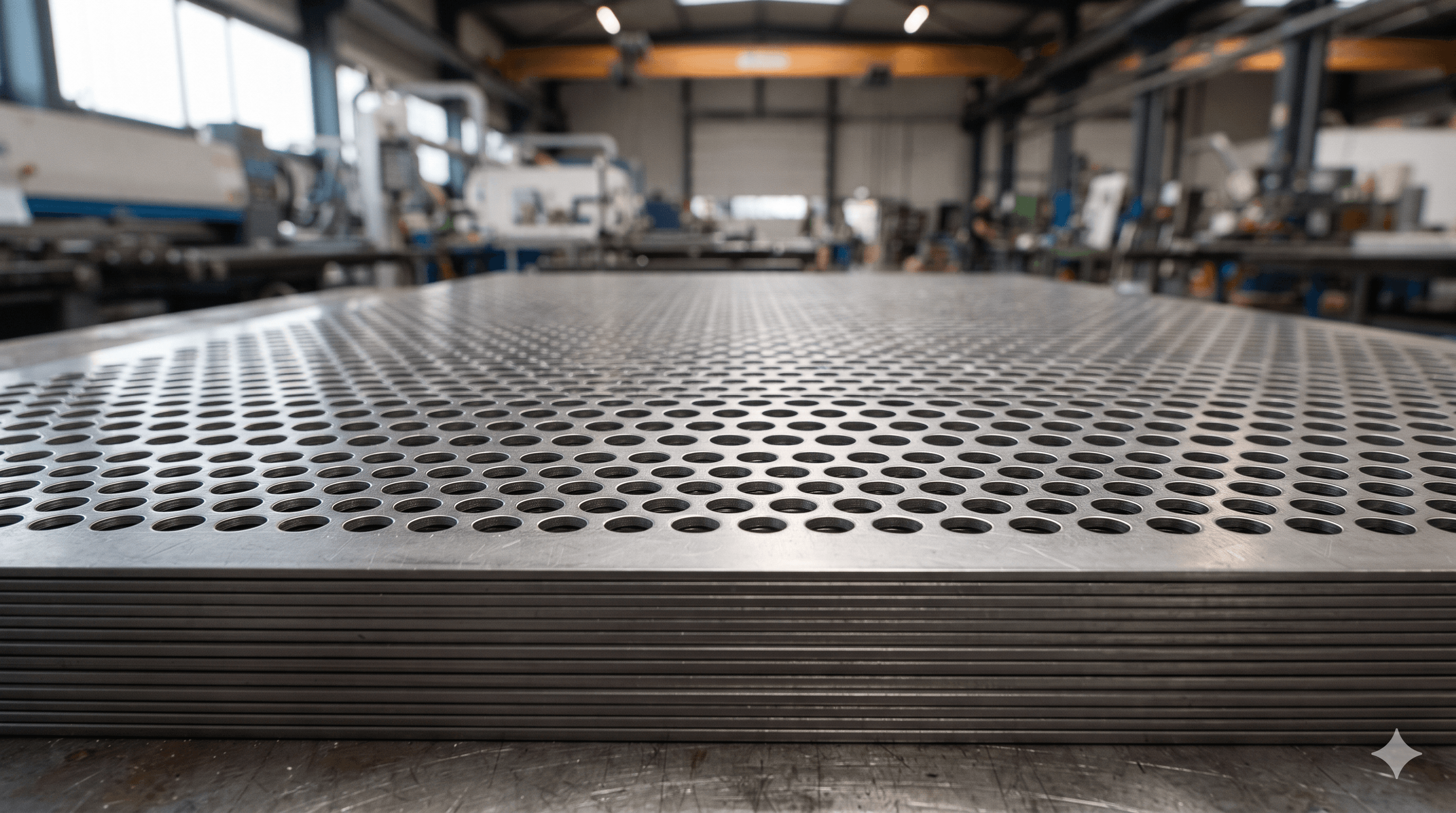
Perforated sheets are flat metal sheets punched with a repeating pattern of holes (such as round, square, slotted, or hexagonal) used across industries for ventilation, filtration, screening, safety guards, and architectural design. They are categorized by material (Stainless Steel, Mild Steel, Aluminium, and GI), hole dimensions, and open area percentage.
What Is a Perforated Sheet?
A perforated sheet is a flat metal sheet manufactured with a repeating pattern of holes. Common materials include stainless steel, mild steel, aluminium, and galvanized steel.
Three important specifications define every perforated sheet:
- Hole Size: The diameter or dimensions of each individual opening.
- Pitch: The distance between the centers of adjacent holes.
- Open Area %: The percentage of the total sheet surface occupied by openings.
These specifications directly influence airflow, light transmission, fluid passage, weight, and structural strength.
Types of Perforated Sheets by Material
1. Stainless Steel Perforated Sheets
Preferred for applications where corrosion resistance, durability, and hygiene are paramount.
- SS 304 Perforated Sheets: Commonly used in food processing, pharmaceutical machinery, filtration systems, and interior architectural panels.
- SS 316 Perforated Sheets: Recommended for aggressive chemical, industrial, or marine environments.
2. Mild Steel (MS) Perforated Sheets
A cost-effective and robust option for heavy-duty industrial applications. Commonly utilized for machine guards, industrial screens, equipment enclosures, ventilation panels, and general fabrication. They are typically protected with paint, powder coating, or galvanization.
3. Aluminium Perforated Sheets
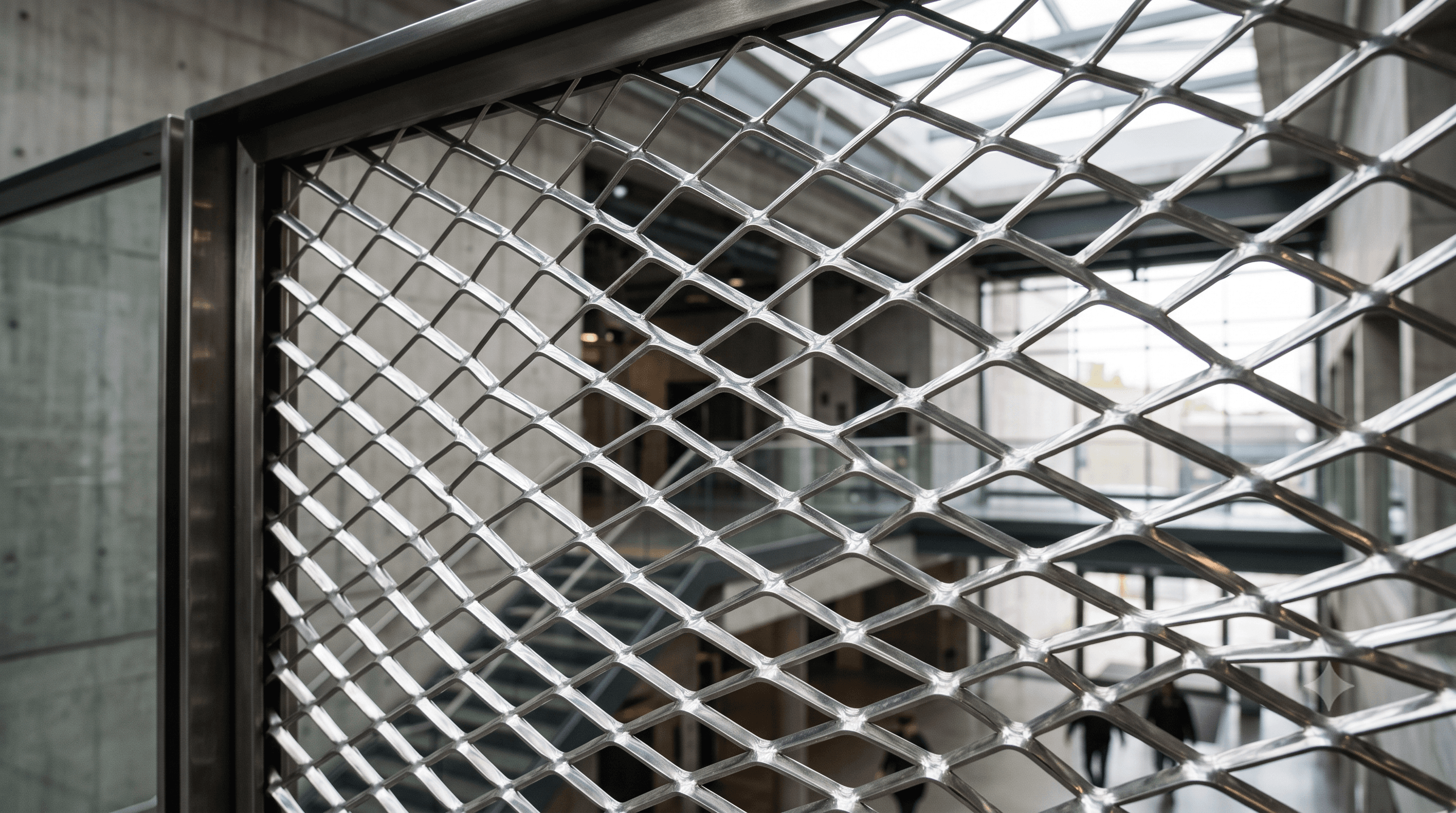
Lightweight with natural corrosion resistance, making them ideal for weight-sensitive applications including building façades, ceiling panels, sunshades, decorative screens, and architectural cladding.
4. GI (Galvanized Iron) Perforated Sheets
Coated with zinc for enhanced outdoor corrosion resistance at a lower cost than stainless steel. Widely used in agricultural equipment, drainage screens, outdoor fencing, and industrial ventilation panels.
Types of Perforated Sheets by Hole Pattern
| Hole Pattern | Primary Characteristics & Best Uses |
|---|---|
| Round Hole | Most common pattern; excellent balance of strength and open area; ideal for filtration, ventilation, and machinery guards. |
| Square Hole | Distinct visual appearance and high open area; used for sorting, screening, architectural panels, and equipment grilles. |
| Slotted Hole | Elongated openings designed for drainage, grading, screening, and directional material flow. |
| Hexagonal Hole | Maximizes open area while maintaining lightweight structural panels. |
| Decorative / Custom | Tailored patterns for architectural façades, interior feature panels, and brand installations. |
Standard Sizes, Thickness & Specifications
While custom dimensions are widely available for bulk requirements, standard manufacturing benchmarks typically include:
- Standard Sheet Sizes: 1220 × 2440 mm (4 × 8 ft), 1250 × 2500 mm, and 1000 × 2000 mm.
- Thickness Range: 0.50 mm to 10 mm (custom gauges available on request).
- Open Area Range: Typically 20% to 60% depending on pattern and pitch.
- Standard Finish: Supplied in mill finish; custom finishes, powder-coating, or polishing can be arranged for bulk orders.
Common Applications Across Industries
- Construction & Architecture: Building façades, wall cladding, false ceilings, staircases, balustrades, sunshades, and decorative partitions.
- Filtration & Screening: Separation machinery in sugar mills, rice mills, cement plants, and mining screening equipment.
- HVAC & Ventilation: Air diffusers, acoustic control panels, AC grilles, and equipment enclosures.
- Agriculture & Food Processing: Grain grading, seed cleaning screens, sieves, trays, and centrifuge machinery.
- Safety & Machine Guarding: Protective industrial machine guards, walkways, and anti-skid flooring.
Perforated Sheet Price: What Affects the Cost?
Perforated sheet pricing is dynamic and depends on several key metrics:
- Material Grade: Stainless steel (especially SS 316) commands a higher raw material value than MS or GI.
- Sheet Thickness & Gauge: Thicker metal sheets increase weight and material cost.
- Hole Size & Complexity: Fine micro-perforations or non-standard custom tooling require specialized machine setups.
- Order Volume: Bulk production runs optimize per-sheet setup costs significantly.
- Surface Finish: Standard mill finish versus customized coatings or polishing.
To receive an accurate quotation, provide your supplier with: Material grade, thickness, hole shape, hole size, pitch, open area, sheet dimensions, and required quantity.
How to Choose the Right Perforated Sheet
- Assess the Operating Environment: Choose stainless steel for corrosive or hygienic zones, aluminum for lightweight exteriors, and MS/GI for cost-effective industrial setups.
- Define the Core Function: Determine whether the sheet is meant for structural screening, fluid filtration, airflow ventilation, or aesthetic cladding.
- Calculate Open Area: Ensure the percentage of open space matches your flow, light, or ventilation requirements without compromising structural integrity.
- Select Appropriate Thickness: Match sheet thickness to structural span and mechanical load demands.
Why Buy From a Trusted Perforated Sheet Manufacturer?
Sourcing from an experienced manufacturer guarantees precise hole geometry, burr-free punching, accurate open-area ratios, and consistent batch-to-batch quality.
Jai Shree Perforator is an established manufacturer delivering high-grade stainless steel, mild steel, aluminum, and GI perforated sheets tailored to exacting industrial and architectural standards. Share your drawings or specifications with our engineering team for reliable guidance and competitive pricing.
Frequently Asked Questions (FAQs)
Q1. What is a perforated sheet used for?
Perforated sheets are widely used for industrial filtration, ventilation, acoustic baffles, machine guarding, agricultural grain sorting, and modern architectural cladding.
Q2. Which material is best for perforated sheets?
Stainless steel (SS 304/316) is best for corrosive and hygienic conditions, aluminum is ideal for lightweight architectural facades, and MS or GI are cost-effective choices for general industrial applications.
Q3. What is the standard size of a perforated sheet?
The most common standard dimensions are 1220 × 2440 mm (4 × 8 feet), with sheet thicknesses ranging from 0.50 mm to 10 mm.
Q4. What does open area percentage mean?
Open area is the proportion of the sheet's surface covered by holes. A higher open area improves airflow and light transmission but reduces overall sheet rigidity.
Q5. Can perforated sheets be customized?
Yes. Hole size, shape, pitch, sheet dimensions, thickness, and margins can be fully customized for industrial projects and bulk orders.